
Composition of Outdoor Painting by Edgar Payne
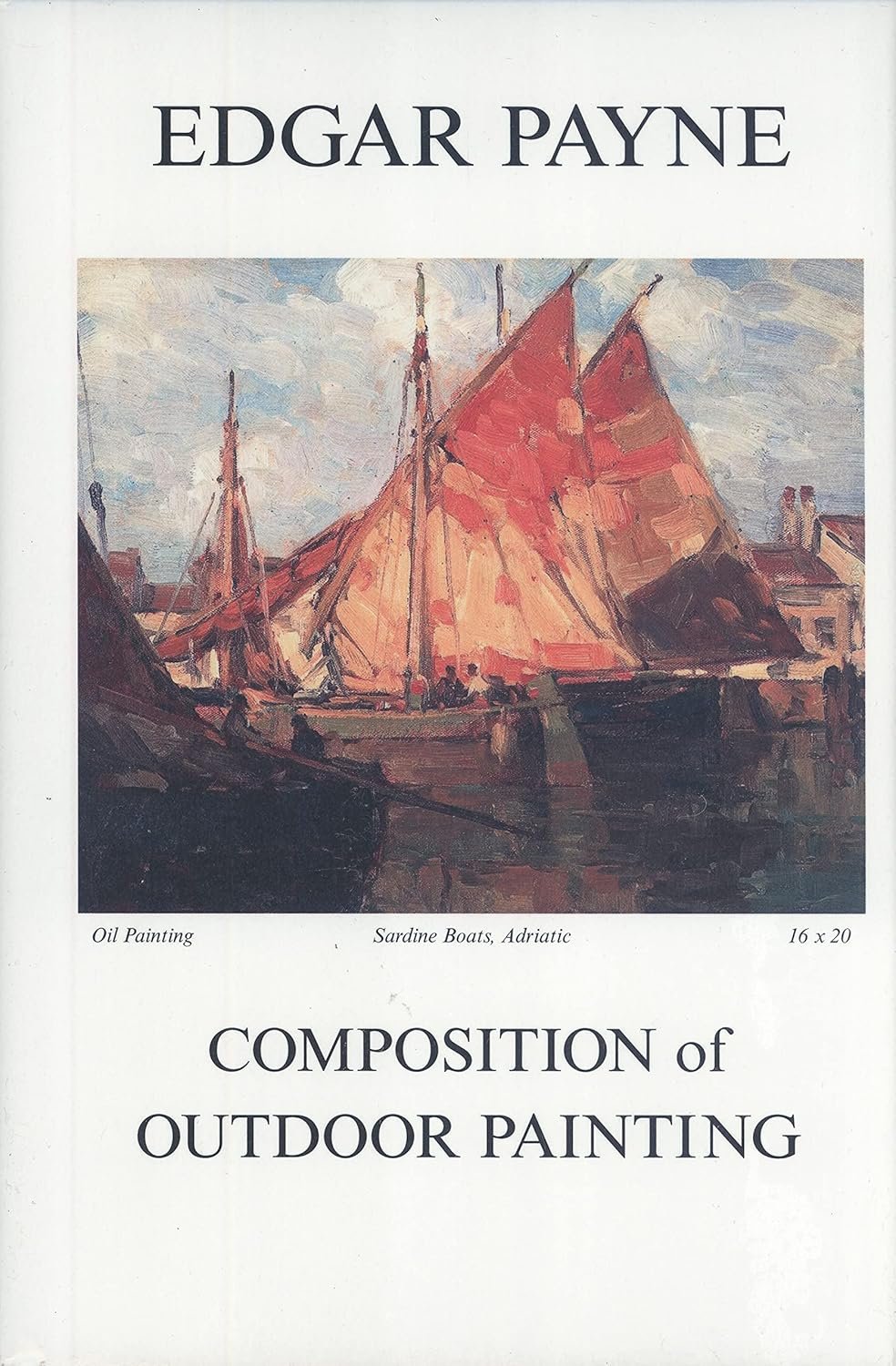
Composition of Outdoor Painting by Edgar Payne
Edgar Alwin Payne's Composition of Outdoor Painting is a classic art textbook that breaks down landscape composition into fundamental "design stems" or structures, such as the S-curve, triangle, and steel yard, to help artists build effective paintings. It uses black-and-white examples, often from masterworks, to illustrate principles like value control, repetition, and atmospheric perspective, providing a framework for organizing elements in nature to create compelling, natural-looking art. The book teaches these structures as tools to free creativity, not as rigid rules, allowing for more imaginative and successful designs.
Key Concepts:
Design Stems: Payne codifies about 15 basic compositional structures (e.g., S-curve, triangle, diagonal, circular) that serve as a foundation for organizing a painting.
Value and Structure: The book emphasizes the importance of value grouping and the underlying structure of a painting, using black-and-white examples to highlight these elements.
Atmospheric Perspective: It explains how to create a sense of depth and atmosphere in outdoor scenes.
Disguising Technique: The ultimate goal is to master these principles so they become invisible, allowing the painting to appear natural and mysterious.
Content and Style:
Format: A hardcover textbook, originally published in 1941, with numerous black-and-white illustrations and thumbnail sketches.
Focus: Primarily on landscape and seascape painting, offering practical advice for outdoor artists.
Purpose: To provide a logical, disciplined framework for composition, moving beyond instinct to create more successful and attractive paintings.